
The eight books we'd hand a tech founder are The Lean Startup by Eric Ries, The Hard Thing About Hard Things by Ben Horowitz, Zero to One by Peter Thiel with Blake Masters, The Founder's Dilemmas by Noam T. Wasserman, Deep Work by Cal Newport, The Power of Habit by Charles Duhigg, The Startup Owner's Manual by Steve Blank and Bob Dorf, and Hooked by Nir Eyal. None of them is a trend book, so if you're hunting for startup books for 2024 or beyond, this is still the list we'd start you on. There's no shortage of people selling entrepreneurial wisdom, so the real question is whose lessons are worth your evenings.
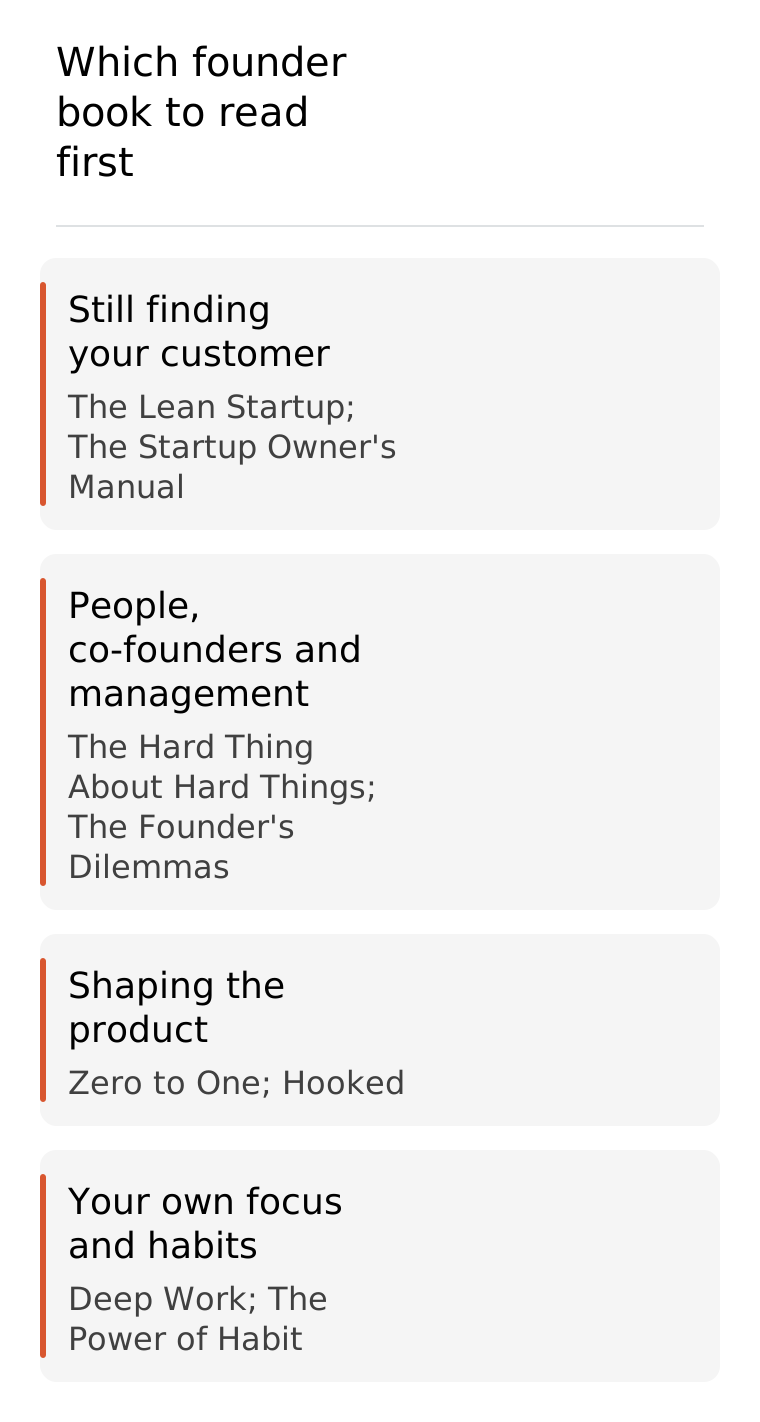
You don't need to read them in order. Pick the one that matches the problem on your desk this month. Try The Lean Startup and The Startup Owner's Manual if you're still working out who your customer is. If the headache is people, co-founders or management, reach for The Hard Thing About Hard Things and The Founder's Dilemmas. Zero to One and Hooked suit you if you're shaping the product itself, and Deep Work or The Power of Habit help if the bottleneck is you. The mix runs from founders' own war stories to Wasserman's data-led research, with a couple of books on focus and habits for good measure.This collection of proven startup books should cover almost everything startup founders need to get on the road to rubbing shoulders with the top tech entrepreneurs in Silicon Valley. Whether you are looking to boost your customer base, or drive sales, these books are sure to inspire your entrepreneurial spirit.
The Lean Startup by Eric Ries
With over a million copies sold around the world, Eric Ries' idea of the 'lean startup' method has gained this book the must-read status amongst entrepreneurs. Ries draws upon the various business ventures of his life as well as astute observations of industry trends to create this fundamental read, with his past experience feeding into the development of the titular 'lean startup' process.
Ries' theory is written with a customer-first mentality, with his process placing customers at the center of creating a viable product capable of thriving in the market. Pushing the iterative development of a Minimum Viable Product, Eric Ries has written a book that has helped many startups in the early stages and is sure to assist many more in the future.The Hard Thing About Hard Things by Ben Horowitz
A proven leader in Silicon Valley that venture capitalists around the world admire, Ben Horowitz's book handles some of the harsh truths and humbling realities that founders and seasoned entrepreneurs will have to face in the business world. Although the path will not always be easy, as foretold in this piece, Horowitz still manages to present his teachings with humor and wit for an enjoyable read. With crucial advice for businesses at every stage, Ben Horowitz and his approach to management is a must-read for leaders of all walks of life.
The book handles topics every CEO will need to face at some point in management, from relations with other companies and entrepreneurs, issues within the team, how to establish and manage company culture, difficult steps needed to facilitate growth, and the personal steps leaders need to take in order to keep themselves operating as well as their businesses. Packed full of personal wisdom, every entrepreneur would greatly benefit from a read of Horowitz's teachings.Zero to One by Peter Thiel with Blake Masters
As one of the most successful tech entrepreneurs on the planet, Peter Thiel has a wealth of knowledge that anyone in the technology space would be wise to listen to. As a co-founder of tech giant PayPal and the first outside investor in Facebook, Thiel clearly has a knack for what makes a viable tech startup.
In Zero to One, Thiel explores how creativity is the way of the future, and always has been. Rather than a step-by-step process or a handbook on how to make money, Thiel's book provides his personal reflections on the tech space, and how the development of completely new ideas and products is the way forward for companies and startups. With innovation at the heart, Thiel presents a vision for the future, one that is there for the taking for startup founders.The Founder's Dilemmas by Noam T. Wasserman
Bringing a more academic perspective to business literature, Noam T. Wasserman presents one of the most fundamental books a tech entrepreneur and anyone looking to start their own business needs. Wasserman has written a comprehensive guide for startups, using a wealth of data from over 10,000 founders and 3,500 startups, as well as inside stories from some of the biggest entrepreneurs in tech. Wasserman tackles every conceivable issue founders may face on their way to becoming a successful company.
Rather than try and tackle the near nebulous world of international business relations, Wasserman brings a fine-tooth comb to what a founder can truly manage at every stage of growth and development. Wasserman offers lessons for the boardroom, providing guidance on who to get into business with, what to look for in a co-founder aside from just funding, and so many more intricate details of the human level of business that many may fail to consider when creating their company. For the best startup possible, Wasserman provides a crucial reference.Deep Work by Cal Newport
Boiling down the process further still, Cal Newport, author of the acclaimed Study Hacks blog and mastermind of optimizing productivity, presents a guide for improving one's ability to work in an ever-distracting world. As well as accumulating the capital of business, a keen entrepreneur would do well to conquer the invaluable capital of focus and drive.
Taking a look at the culture of work in the modern day, Newport offers a way to create a better space, attitude, and life balance when it comes to one's own work. As much as technology has improved everyday life, it also brings distractions that block creativity. With Newport's wisdom to harness the skill of 'deep work', those looking to level up their productivity can find a path to become the CEO they dream of.The Power of Habit by Charles Duhigg
Classed as another 'self-help book', Charles Duhigg offers another look at boosting output and productivity in his study of how people create and maintain habits. With a background on reporting and investigating the business practices of tech giants, Duhigg has seen what makes the most successful companies in the world and their leaders ticking along.
Throughout this book, Duhigg offers a deep dive into the world of incorporating the use of positive habits into company policy and methodology. With genuinely successful examples of habit management from companies around the world, Duhigg's book could very well help you create a set of habits of your own to growth to the next level.The Startup Owner's Manual by Steve Blank and Bob Dorf
Doing exactly as the title suggests, Steve Blank and Bob Dorf come together to present perhaps the most comprehensive book a startup founder could possibly want. With both men having backgrounds in entrepreneurship and lean startup thinking, Blank and Dorf's guide is taught in leading universities to the next generation of thinkers.
For those who enjoy a step-by-step guide, this book breaks down the means for success in an easy read. Blank and Dorf have created dozens of charts, graphs, diagrams, and checklists for startup owners to look through and consider. As well as the data, the duo presents ideas and methods for identifying your customers, marketing to them, keeping them coming back, and growing sales into new audiences and areas. Being such a fundamental piece of business literature, this book is a must-have for startup owners.Hooked by Nir Eyal
A particularly notable piece for those developing products in the tech market is Nir Eyal's work on creating audience-grabbing products, Hooked. Having founded an advertising company that harnesses the power of the internet and social media, Eyal has become an expert in behavioral engineering, acutely aware of how consumers engage with products and campaigns.
In explaining his research, Eyal breaks it down into a four-step process - the Hook Model. On top of the theory, Eyal has practical examples of the Hook Model put to the test. With case studies from tech juggernauts like Apple, Twitter, Pinterest, and more, Eyal's work on 'hook cycles' and customer behavior holds invaluable information for creators, investors, founders, and startups in the tech space.Conclusion
Hopefully, this list will spark some inspiration, an idea, and ultimately success for your next venture. Though there are plenty of voices worth listening to and an array of books on the market, this list provides a lean look at the top ones out there. With the technology industry being as varied and complex as it is, there is no set rule or one simple path for climbing the ladder toward success. By listening to a range of sources, identifying who might have the best tips for your specific targets and goals, and those who have experience in whatever your niche may be, you'll have all the tools you'll need.
Books will get you thinking, but they won't run your ad account. Our founder's own YouTube channel covers paid ads for SaaS, B2B and homeware brands, if you'd like the free version first. Here's one honest warning that sits nicely alongside The Lean Startup: if you're still looking for product-market fit, hold off on ads, because they're the most expensive way to find out. If people already buy your product and you want more of them, see how we run paid ads for SaaS and B2B companies, then get in touch and we'll take a look at your account.Tagged
- marketing
- tech