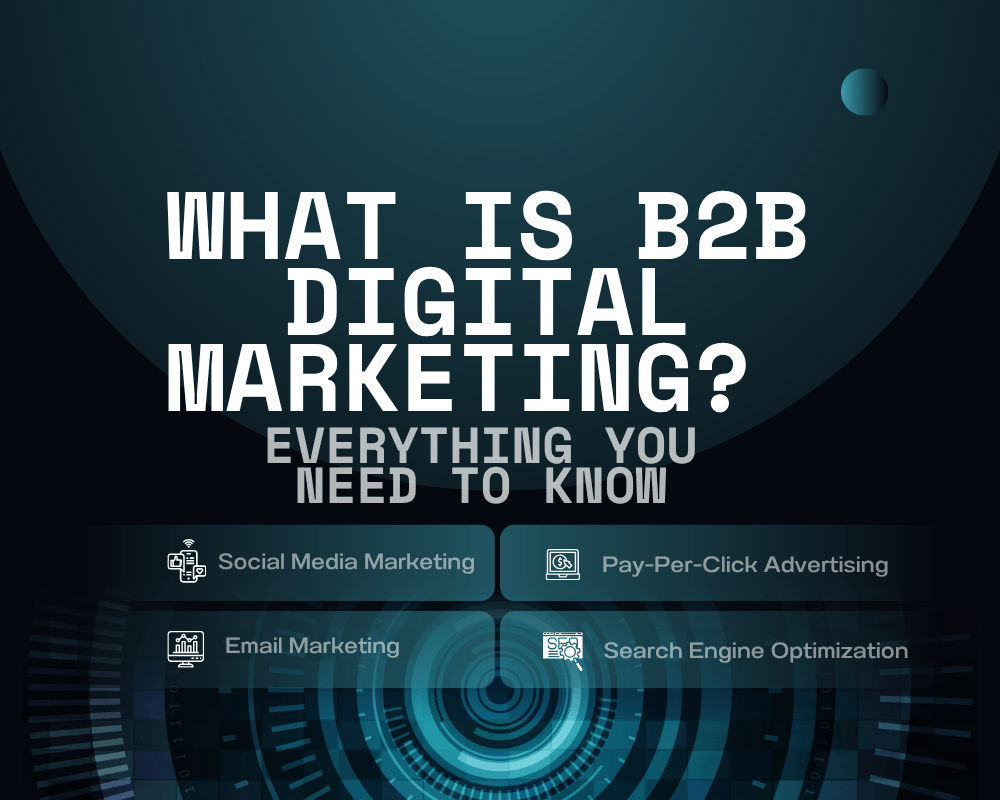
What Is B2B Digital Marketing? Everything You Need to Know
Learn how strong B2B digital marketing helps you turn your online presence into your most powerful sales asset.
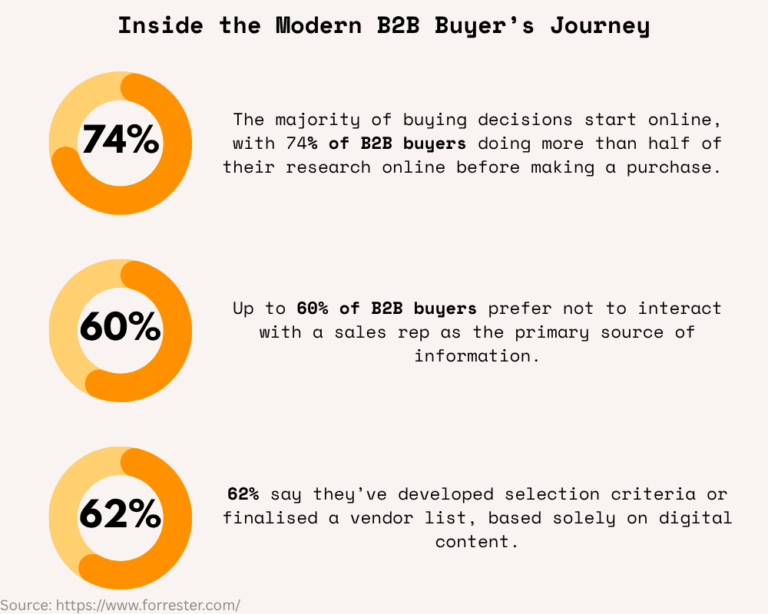
In the business-to-business (B2B) sector, digital self-education dominates. A recent report by Garnter shows that 61% of B2B buyers prefer a rep-free buying experience. As buyers move toward digital self-education and self-serve research, your online presence becomes your first sales meeting, long before a rep ever gets involved.
This could be due to a generational shift, due to the fact that a whopping 71% of today’s B2B buyers are Millennials and Gen Z, according to another Forrester report. Whatever the reason, one thing is clear: your digital presence matters more than ever.
And more so, modern audiences expect an intuitive online experience with as little friction as possible, and digital marketing is one of the key ways to deliver it. In this guide, we break down what B2B digital marketing really means, the channels that matter most, and the strategies that help you scale in a competitive landscape.
What Is B2B Digital Marketing?
B2B digital marketing is the strategic use of online channels to attract, educate, and convert other businesses. Unlike business-to-consumer (B2C) marketing, which focuses on fast conversions such as impulse purchases, B2B digital marketing involves longer buying cycles, multiple decision-makers, and relationship-driven communication. The complexity of the B2B market lies in the fact that it often requires significant upfront investment in customer acquisition (CAC) long before any measurable return.
The Main B2B Digital Marketing Channels
Digital marketing uses a multi-channel approach, which includes both inbound and outbound strategies. Inbound marketing pulls buyers in with useful, search-friendly content, whilst outbound marketing pushes your message out through ads, email, and direct outreach.
Here are the main B2B digital marketing channels to focus on:
Search Engine Optimisation (SEO): Building Authority and Capturing Organic Demand
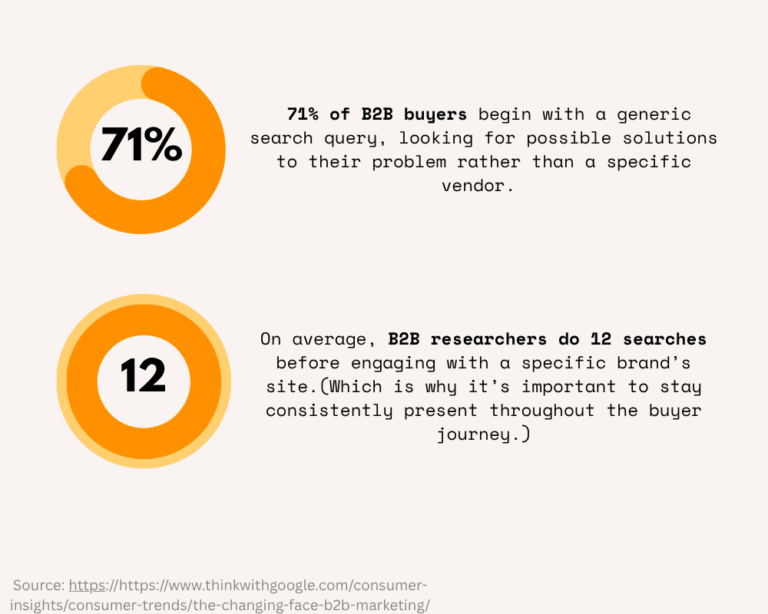
SEO is an ongoing process designed to optimise your web pages so they rank higher on search engine results pages (SERPs). By refining your website and content around relevant keywords, you can attract visitors who are either just beginning their search for a solution (Top of the Funnel), actively researching (Middle of the Funnel), or comparing different options (Bottom of the Funnel). The better your SEO, the higher your chances of being found by your ideal customer.
There are four main components of SEO:
⯈ On-page SEO strategy involves optimising individual pages for specific keywords and relevance.
⯈ SEO content is about creating valuable content relevant to your users’ intent, in a user-friendly format.
⯈ Off-page SEO refers to creating credibility and brand mentions. These ‘votes of confidence’ from other reputable websites tell search engines that your content is trustworthy.
⯈ Technical SEO refers to optimising the backend of your website’s structure. It focuses on the technical aspects such as speed, security, responsiveness and navigation.
It’s important to remember that optimising your website isn’t only about ranking higher, it’s also about creating a frictionless user experience. A well-structured, fast, and informative website keeps visitors engaged and builds trust with both users and search engines.
Content Marketing: Driving Awareness and Nurturing Through Valuable Resources
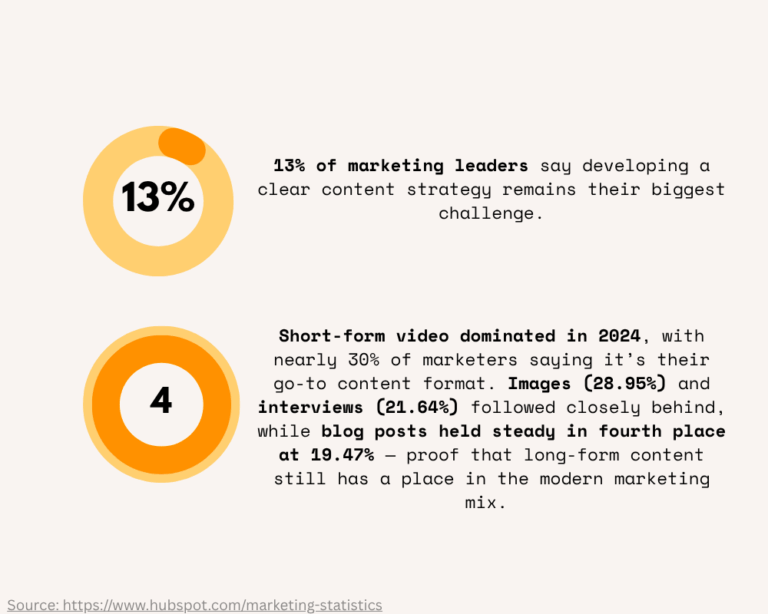
B2B content marketing is the practice of creating and distributing valuable content to attract, educate, and convert business audiences. Unlike B2C marketing, which often targets broad consumer groups, B2B content is tailored to specific decision-makers who influence purchasing within their organisations.
Types of B2B Content by Funnel Stage
⯈Top of Funnel: Create broad, educational content such as blog posts, infographics, podcasts, guest articles, and social media content that introduce topics and build awareness.
⯈Middle of Funnel: Use eBooks, webinars, white papers, and product comparison guides to demonstrate expertise and show how your solution fits their needs. It’s also a great way to capture contact details from prospective customers who are actively researching solutions.
⯈Bottom of Funnel: Produce case studies, product demos, testimonials, proposals, and pricing pages that reinforce credibility and prove ROI.
Content marketing is one of the most cost-effective channels for B2B brands. The best part is that once you’ve created valuable resources, they keep working for you, bringing in traffic and leads long after they’re published.
Email Marketing: Strengthening Retention and Lead Nurturing
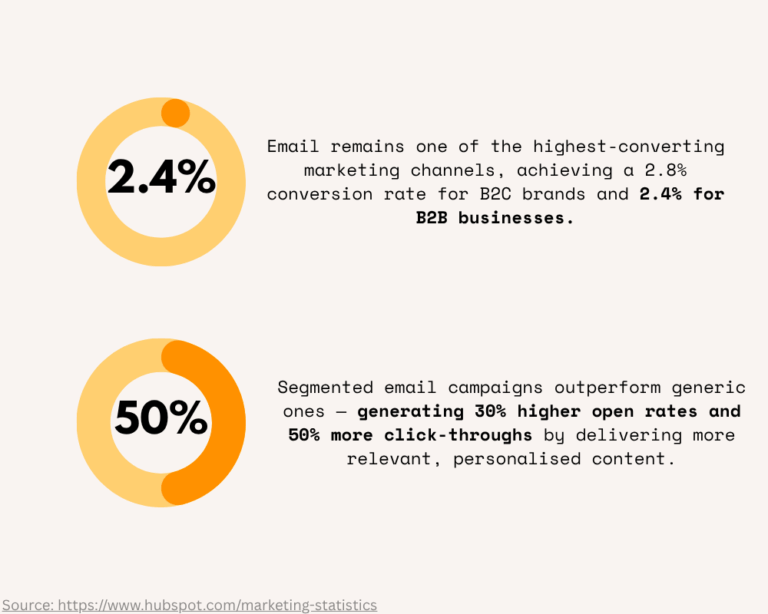
Email marketing can be an extremely effective channel for nurturing leads and maintaining client relationships in the B2B space (if done right). It allows you to deliver targeted, personalised content directly to decision-makers through newsletters, product updates, or invites to webinars and events. As with most channels, personalisation is the fine line between conversion and your email getting lost in the abyss of spam
Here’s how you can give your emails that extra personal touch:
⯈ The subject line is your first impression and should intrigue your prospect to open the email. Adding your customer’s name or adding a line about something they spoke about can make a big difference.
⯈ The content itself should also be personalised to each recipient’, interests, demographics and interactions with your business. This ensures your message feels relevant rather than generic. Marketing automation tools such as Mailchimp or Zoho Campaigns make this easier by allowing you to create custom or prebuilt audience segments.
For instance, if someone signs up for a freemium subscription, you wouldn’t send them top-of-funnel awareness emails. Instead, you’d personalise your approach by sharing how premium features can solve their specific pain points to guide them down the funnel.
Social Media Marketing: Building Thought Leadership and Engagement
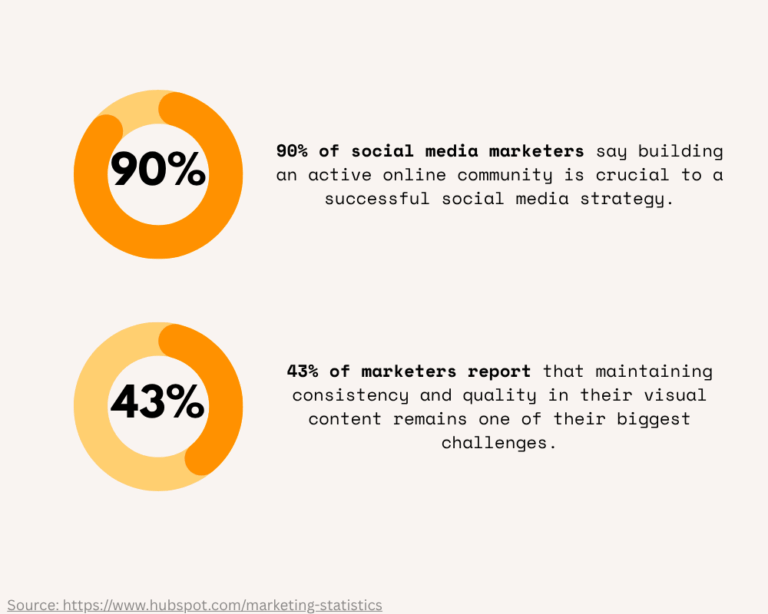
Social media marketing in the B2B space is less about viral trends and more about building trust and genuine connections. You can achieve this by creating content that helps your audience understand a concept or solve a problem, positioning your brand as a helpful resource.
Subject-matter expert content that educates while also giving the audience a chance to engage and connect with your brand on a personal level. For example, when a CEO or founder shares insights, experiences and engages with the audience directly on social platforms.
Some tips to get started
⯈ Choose the right platforms. Post where your target market spends the most time. For example, LinkedIn is ideal for the B2B industry, YouTube is well-suited for long-form educational content, and X is ideal for starting conversations.
⯈ Focus on quality over quantity. Post high-quality, interesting content more likely to get engagement rather than bombarding your audience with feed fillers.
⯈ Engage with your audience. Give your brand a human heartbeat. In a world full of bots and automation, genuine interaction is what makes people connect with your brand.
⯈ Be authentic. Share real experiences, don’t follow the latest trends, challenge the status quo! Channel your inner Elon Musk and say what others won’t.
⯈ Stay consistent. Stick to a content calendar. Remember, consistency over perfection.
Paid Advertising (PPC): Driving Measurable Pipeline Growth Fast
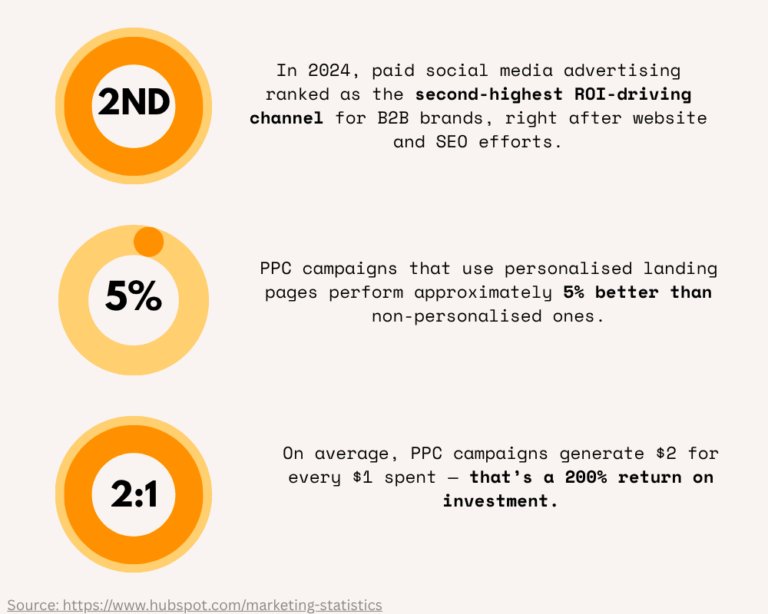
While inbound marketing is great for building trust, outbound strategies like paid advertising can give you immediate visibility at scale. This is particularly beneficial in competitive industries like SaaS, where timing is so crucial.
Beyond speed, paid media also provides precision audience targeting abilities and in-depth analytics, giving you powerful insights into your target audience’s behaviour and intent. Paid advertising is not a one-size-fits-all solution, and which ones you select depend entirely on your business goals, audience, and where they spend their time online.
Here’s a brief overview of each:
⯈ Search Ads (Google & Microsoft): Appear in search results when prospects are actively searching for a solution, great for capturing high-intent leads.
⯈ LinkedIn Ads: Perfect for targeting by job title, company size, and industry, making it ideal for account-based marketing.
⯈ Meta Ads (Facebook & Instagram): Useful for retargeting and brand awareness, especially for visual storytelling or remarketing campaigns.
⯈ Display Ads: Reach audiences across the web with banner ads. Ideal for remarketing and supporting other paid campaigns, but not effective as a standalone channel due to lower intent.
⯈ Video Ads (YouTube): Help demonstrate your product, showcase expertise, and connect through storytelling.
If you hire an agency, choose one that understands B2B funnels and buying cycles, not just paid ads.
3 B2B Digital Marketing Strategies to Take Your Business to New Heights
To scale effectively in B2B, your marketing can’t live in silos. Your channels, data, and messaging need to work together to guide buyers through every stage of their journey.
Omnichannel Marketing: Creating a Seamless Buyer Experience
Omnichannel marketing goes beyond simply being present on multiple channels. It focuses on personalisation and consistency, delivering a cohesive user experience at every touchpoint. But what does a cohesive experience really mean?
It means that when a prospect stumbles upon a LinkedIn ad highlighting your product’s ability to reduce churn, they should find supporting proof points and case studies when they click through to your website (instead of generic homepage messaging).
When they later receive an email, it should reference the same pain point they engaged with earlier, offering a demo or guide that helps them take the next step.
Here is a simple step-by-step:
⯈ Centralise all customer data into one system (like a CRM or marketing automation platform) so every interaction, from ad clicks to email engagement, is tracked in one place
⯈ Segment your audience by funnel stage, firmographics (industry, company size, job title), and behavioural data (such as website visits, downloads, or email opens).
⯈ Automate personalised messaging across channels like email, ads, and social media to deliver consistent, relevant communication at each stage of the buying process.
While omnichannel marketing focuses on delivering a consistent experience across every touchpoint, Account-Based Marketing (ABM) takes it a step further by tailoring that experience to your most valuable accounts.
Account-Based Marketing (ABM): Aligning Sales and Marketing Around High-Value Accounts
Account-Based Marketing (ABM) flips the traditional funnel on its head. Instead of casting a wide net, ABM focuses your marketing and sales efforts on a carefully selected list of high-value accounts, or as I like to call it, ‘tightening the net’ around the businesses that are the best fit for your solution.
You might ask yourself, isn’t that just lead generation? Not quite. Although they overlap, ABM is much more strategic. Below are some key differences:
⯈ ABM campaigns focus on engaging and converting a smaller, carefully selected group of high-value prospects (often just a few dozen to a few hundred accounts for larger businesses) and guiding them strategically through the funnel.
⯈ Lead generation campaigns often target broad audience segments, such as industries, roles, or job titles. ABM takes a different approach, building a strategic list of specific high-value accounts identified through close collaboration between sales and marketing teams.
⯈ Lead generation and Account-Based Marketing (ABM) differ in the metrics they track because each measures success in its own way. Lead generation focuses on volume-based metrics such as total leads, cost per lead (CPL) and MQL scoring. ABM, on the other hand, focuses on account penetration and the quality of interactions across key stakeholders.
Aligning Sales with Your Digital Marketing Strategy
Although it’s not a digital marketing strategy per se, aligning your sales and marketing strategies can make every part of your digital strategy more effective. Think of it like a bus with two drivers taking turns. If they’re not using the same map, they won’t reach the destination on time (or maybe not ever). Misalignment causes inefficiency and, more importantly, a wasted budget.
Here’s how you can prevent that:
⯈ Agree on what qualifies as a lead. Create a unified definition so marketing isn’t optimising for volume while sales are chasing prospects with little intent. Shared criteria (like job title, company size, or engagement level) ensure both teams are targeting the same audience quality.
⯈ Set shared goals and KPIs. Both teams should measure success by the same outcomes, such as revenue growth, pipeline velocity, and reduced customer acquisition cost (CAC). For example, instead of marketing focusing on lead volume alone, track how many of those leads actually convert into opportunities or customers.
⯈ Ensure message consistency across every touchpoint. We’ve already discussed the importance of personalisation and cohesion across channels, but that same consistency also needs to exist between teams. For example, marketing teams can take feedback from sales reps on common pain points and frequently asked questions to create valuable and relevant marketing assets.
Why Paid Ads Are the Backbone of B2B Digital Marketing
There’s no doubt that you can reap incredible results with an organic marketing strategy, BUT it takes time. And time is a luxury you don’t always have during time-sensitive sales cycles, where prospects are actively comparing solutions. The good news is that it is something you can buy with paid media.
For example, even with strong SEO, it can take up to a year (or more) to rank on the first page of Google for competitive keywords. Paid advertising can get you there instantly.
Paid media also ties together with the strategies we’ve covered so far: it powers omnichannel marketing by keeping messaging consistent across platforms, strengthens ABM through hyper-targeted account outreach, and supports sales alignment by generating qualified leads that sales teams can immediately act on.
Getting Started with Profitable B2B Paid Advertising
To be profitable, you need the right strategy paired with genuine product–market fit; otherwise, you’re just pouring fuel into a car with no engine.
At Snowball Creations, we’ve run thousands of ppc campaigns across SaaS, eCommerce, and B2B sectors with every channel mix imaginable, and every budget size under the sun.
Here are a few things we’ve learned, and a few you shouldn’t have to learn the expensive way:
⯈ Start simple, start with high-intent channels.
We always recommend focusing on the highest-intent, most reliable platforms first. For B2B brands, that’s usually Google Ads and LinkedIn Ads. Once you’ve proven profitability, then expand.
⯈ Cost per click varies by market value.
Spending more often means reaching higher-intent prospects who are closer to buying. In Snowball Creation’s study of 8 B2B accounts across $2.6M in Google Ads spend, chasing cheap clicks actually increased acquisition costs.
The strongest results came from mid-to-high (cost-per-click) CPC ranges, where competition and buyer intent were highest. In short: stop optimising for cheap clicks. Start optimising for cheap conversions!
⯈ Avoid diluting your budget across too many channels.
Every platform’s algorithm learns from conversion data. When you spread ad spend too thin, you slow that learning curve and make it harder to reach efficiency. By concentrating your budget, you feed more data into fewer algorithms, helping them find better customers faster. Channels like Display Ads are good for awareness or remarketing, but rarely deliver great ROI on their own.
The Core of a B2B Paid Strategy: Google and LinkedIn
For B2B brands, the most reliable and scalable performance almost always comes from Google Ads and LinkedIn Ads, both channels that combine strong intent signals with precise audience targeting.
Let’s take a closer look at how combining paid search and social media advertising (specifically through Google Ads and LinkedIn Ads) can create a profitable engine for business growth:
Google Ads: Buying Intent Gold
The biggest advantage of Google Ads for B2B is immediate visibility, exactly where users are actively searching for a solution, which we call ‘buying intent gold’. When someone types in a high-intent keyword, they’re already halfway down the funnel and ready to take action. It also gives you granular control over budgets, targeting, and ad scheduling.
Here’s how to maximise your ROI from Google Ads:
⯈ Avoid Performance Max (at least at the start).
Performance Max is Google’s do-it-for-you campaign. You tell Google your goal, and let Google’s algorithm place your ads across a variety of platforms and websites based on your goals. While it offers ‘convenience’ and a lower cost per click, the downside is that you lose control over which networks you appear on, to which demographics and prevents you from gathering data on what drives results.
⯈ Target complete user-intent keywords
Use exact and phrase match keywords. These limit Google’s freedom to interpret your targeting, ensuring your ads only appear for searches that genuinely match your offer. This helps protect your budget from irrelevant clicks.
For example, broad match keywords can cause your ad for ‘accounting software’ to show on vaguely related searches like ‘benefits of using accounting software’, giving users results for a blog query.
Targeting information seekers instead of serious buyers. With exact or phrase match, your ads reach people actively looking to purchase accounting software, not just read about it.
⯈ Track beyond the click:
For B2B brands, a ‘conversion’ is hardly ever immediate cash in the bank; instead, it’s often just an early step in the journey. A free trial sign-up or demo request doesn’t necessarily equal revenue. That’s why offline conversion tracking is essential. Connecting your CRM data or using Google Click Identifier (GCLIDS), you can track what happens after a lead comes in and then teach Google’s algorithm which ones convert into paying customers. This prevents Google from optimising campaigns for users who never convert.
We’d recommend using Google Tag Manager (GTM) alongside your Google Ads account. GTM allows you to implement and manage your conversion tags without relying heavily on developers. It also integrates with Google’s offline conversion tracking system, making it easier to send high-quality lead data back into Google Ads.

LinkedIn Ads: Reaching Decision-Makers Where They Already Network
LinkedIn Ads gives you access to highly specific targeting options based on job title, seniority, company size, and industry. This targeting precision is currently unavailable on other platforms, making LinkedIn one of the most effective and popular online advertising platforms for B2B brands looking to reach industry professionals.
However, the higher cost per click means you need to get it right from the start. Here’s how to maximise your ROI with LinkedIn:
⯈ Target tightly, but don’t choke the algorithm. Aim for a target audience size of 20K–100K; that sweet spot gives LinkedIn enough data to optimise while keeping your targeting focused on the right buyers.
⯈ Test multiple creatives. Run at least 2–3 versions per campaign to identify winners faster. Experiment with both visuals and copy; even small tweaks can make a big impact on CTR and cost per lead.
⯈ Use LinkedIn Insight Tag. Similar to Google, LinkedIn offers its own tracking tag. The LinkedIn Insight Tag, which helps you track on-site actions (like demo bookings or form fills) and measure conversions directly from LinkedIn traffic.
It also allows you to build remarketing audiences based on people who’ve visited your site or engaged with your ads. Feeding this data back into LinkedIn’s algorithm helps it learn which audiences convert best, continually improving your campaign performance.
If you’d like to see exactly how these tactics translate into a real-world B2B strategy, watch my full breakdown here:
https://www.youtube.com/watch?v=Vhi1FZsYw-U&t=45s3 Common B2B Marketing Mistakes (and How to Fix Them)
1. Over-relying on Organic Content Without Amplification
Organic content is great for building trust, but relying solely on it can hurt your digital marketing efforts. Social media algorithms prioritise personal posts and paid media over business posts. You may have really good content, but it might not be reaching your entire organic audience. The aim is not to replace your organic efforts, but to amplify them.
Solution: One solution is to increase engagement on your organic content by really focusing on quality content that sparks a conversation so that platforms recognise it as interesting. Higher engagement signals to the algorithm that your posts are worth showing, improving your chances of appearing in feeds. But even then, organic reach will only take you so far.
That’s where paid media comes in. It gives you immediate visibility and far richer data on what resonates most with your audience. It also helps you reach beyond your organic following.
2. Neglecting Bottom-of-Funnel Campaigns
Many B2B marketers obsess over awareness and lead generation and end up neglecting nurturing warm leads. These are the users who’ve visited your pricing page, downloaded your whitepaper, or requested a demo, yet they’re often left hanging. Bottom-of-funnel (BOFU) campaigns are where revenue is made. This is where you address objections, build trust, and reinforce value. Think remarketing ads that show customer success stories, comparison pages, or trial-to-paid nudges.
Solution: Set up remarketing campaigns that target users who’ve engaged with your website with special offers, demo offers, or case studies. Use tailored meddaging that addresses customer pain points and hesitation to convince potential customers to take the next step in the buying journey.
3. Failing to Define (and Personalise for) Your Ideal Customer Profile
We’ve spoken a lot about personalisation, but you can’t personalise without first defining who you’re personalising for. Many B2B brands make the mistake of casting too wide a net and end up catching less anyway.
Without a clear Ideal Customer Profile (ICP), the specific company type, size, industry, and decision-maker roles that bring the highest LTV, your messaging becomes generic in an attempt to appeal to everyone.
Solution: Build your ICP before spending a cent on ads. Use CRM data, sales insights, and customer feedback to identify your most profitable segments. Then tailor your messaging and offers around those profiles across every platform. The tighter your ICP, the stronger your personalisation and the faster your campaigns compound.
Should I Complement My Digital Marketing Strategy with Paid Ads?
If you’ve already nailed product–market fit, have a defined target audience, and some capital to invest, then adding paid ads can absolutely be one of the fastest ways to scale. But without the right structure, it’s just as easy to burn cash as it is to make it.
Paid ads can be a learning process, especially in the B2B arena. Buying journeys are longer, decision-makers are harder to reach, and intent data is spread across multiple platforms. If you’re planning to run ads yourself, start small, master one or two channels (we recommend Google and LinkedIn), and focus on quality data.
You can find a ton of free deep dives on my YouTube channel. If you’re ready to take things further, check out our SaaS Ads Studio, a platform built on a decade of agency experience. It’s designed for founders who want to manage their own campaigns while keeping a truly professional Google Ads setup.
But if you want an expert to do it for you, we’re happy to help. Book a no-obligation chat with the Snowball team to chat about your online marketing goals and how paid advertising can help you achieve them.
Tagged
- advertising