paid advertising · facebook ads · ecommerce · guides
Meta Ads for Homeware and Furniture Brands
How furniture and homeware brands should run Facebook and Instagram ads: a 45-day retargeting window, a progressive-discount carousel and creative first.

A furniture or homeware brand should run Meta ads as a creative operation with a long memory. Find new buyers with creative that shows the product being made and lived with, keep everyone who visits the site in a 45-day retargeting pool, show that pool a progressive-discount carousel, and check the account every week rather than whenever someone remembers. Targeting matters less than most founders expect. The creative, the window and the offer do most of the work, which is good news, because those are the three things you actually control.
That is how we run Facebook and Instagram for the homeware and furniture brands we work with. The rest of this piece is the detail: why the window is 45 days, what goes in the carousel, how the money is split, and what to check first when the numbers fall off a cliff on a Tuesday.
Why a furniture brand needs a longer retargeting window
Furniture needs a longer memory than most e-commerce because hardly anyone buys a dining table on impulse. Someone sees the table, measures the room, shows their partner, checks the delivery date and comes back weeks later. A retargeting window built for a cheap impulse buy forgets them right when they are ready to pay.
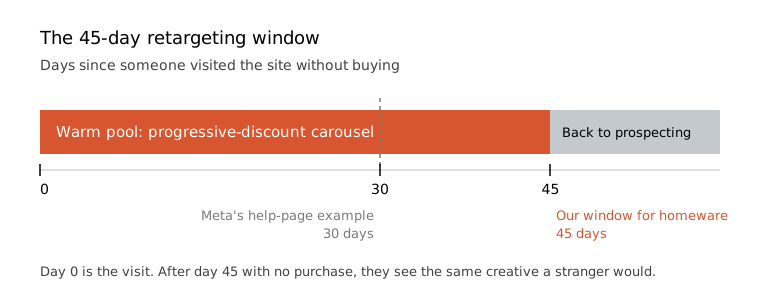
Meta’s own help page on website custom audiences uses people who visited “in the last 30 days” as its retargeting example (Meta Business Help Centre, read 12 October 2026). That is a sensible default for plenty of shops. For a premium sofa or a handmade sideboard we stretch it to 45 days, because a considered purchase rarely fits inside a month, and a warm visitor is worth far more to you than a stranger.
The window has a second job: it tells you when to stop. After 45 days, someone who has not bought goes back into the prospecting pool and sees the same creative a stranger would. That keeps the warm audience genuinely warm, and it stops you paying to show a discount to someone who decided against you back in August.
Creative is the main lever, not targeting
For a homeware brand on Meta, creative is the lever we pull first and most often, ahead of audience settings and ahead of bidding. A beautiful product shot is where the brief starts, not where it ends. The work that tends to earn its keep shows the piece being made, the material up close, and the finished thing in a room that looks like the buyer’s own.
Every creative brief we write names three things: the exact person, their problem and the one action we want from them. “Homeowners aged 30 to 55” is not a person. “Someone who has just bought a Victorian terrace and cannot find a sofa that fits through the front door” is a person, and the ad that speaks to her almost writes itself. The problem is the narrow hallway; the action is “see the modular range”.
Volume matters as much as quality. In the first stage, which we call Finding the Fit, we run a wide range of A/B variants across targeting, messaging and creative to find which roads lead to the highest uptick, before serious money goes behind any of them. That is why ad creative sits inside the service through Snowball Studios rather than arriving as a quarterly folder of photos, and our piece on balancing Meta ads testing goes further into the mechanics.

The progressive-discount carousel for warm audiences
Once someone is in the 45-day pool, they should see different ads from a stranger, and the format we lean on is a progressive-discount carousel. Each card steps the offer up as the basket grows, so the visitor who came for a lamp sees what the matching side table, and then the pair, would cost them. It turns retargeting from “you looked at this, remember?” into a reason to buy more than they planned.
The carousel only works if a few rules hold, and these are the ones we set before anyone designs a card:
- Tiers come from your margin, not from a competitor’s banner. Work out what you can afford to give away on a two-piece and a three-piece order first.
- Warm audiences only. A discount in a cold ad teaches strangers that your full price is negotiable, which is the last lesson a premium brand wants to teach.
- Real products from one range, photographed the same way. A carousel of mismatched shots reads like a clearance sale.
- Recent buyers excluded. Nothing annoys a customer quite like an ad offering money off the sofa they paid full price for last week.
This is also where a premium average order value earns its keep. A brand with a high basket can afford a meaningful step at the top tier; a brand selling low-priced tea towels usually cannot, which is one reason low order values are on our list of accounts we turn down.
How we split the money
Meta for homeware runs in two stages: Finding the Fit, then Scaling the Spend. Once winners exist, we protect them, putting about 80% of the spend behind them and about 20% into new tests, so the account keeps learning without gambling the month on a hunch.
At our minimum ad spend of £2,500 a month per platform, that split is about £2,000 behind proven winners and about £500 into new tests. The proportions hold as the budget grows, and the test money grows with them, which is one reason bigger accounts can afford to try more ideas at once. How the fee and the spend add up is set out in our guide to what a PPC agency costs in the UK.
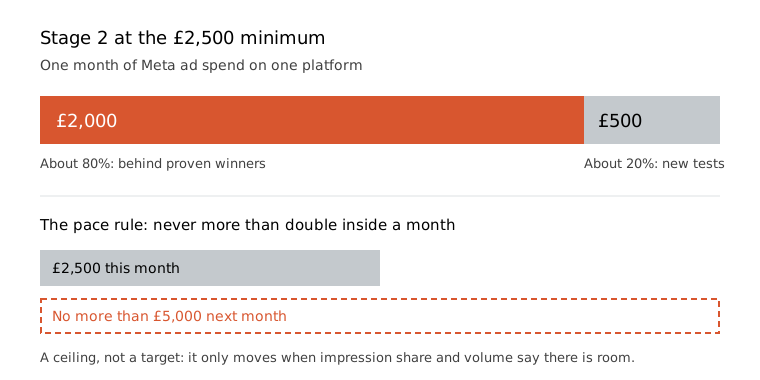
The other rule is about pace. We never more than double an account’s spend inside a single month, however good last week looked. An account at £2,500 this month goes to no more than £5,000 next month, and only if impression share and volume say there is room. A budget jump is one of the five suspects below for a reason.

When Meta performance drops, check these five in order
When a homeware account falls off, we check five suspects in the same order every time. The order saves time: the early ones are quick to confirm, and the later ones are the ones people forget to look at.
- Creative fatigue. The same lifestyle shot has run for weeks and the audience has stopped seeing it.
- Frequency. The warm pool is small and is seeing the carousel too often. The 45-day window helps, but a brand with modest traffic can still wear it out.
- Budget jumps. Someone doubled the spend after a good weekend. See the pace rule above.
- Stock-outs. The hero product sold out or moved to a long lead time, and the ads are still sending people to it. For made-to-order furniture this one is easy to miss.
- Toxic comments. One unanswered complaint about delivery sits under your best ad and does the selling in reverse.
These checks sit inside the weekly lever checks we run on every Meta account. The setup is a fraction of the job; the weekly management is where the money is made, and a campaign nobody checks is a campaign the platform runs for itself. If you want columns that make these suspects visible at a glance, our custom Meta Ads column setup is the place to start.

What it looks like when it works
Tom Raffield, the furniture and lighting brand, is the clearest example we can share: Facebook and Instagram £1.6m from £154k, 10.7x. It is a furniture business running Meta alongside Google rather than instead of it, which is the shape we recommend for most homeware brands we take on.
On most furniture accounts we run, Meta’s job is different from Google’s. It puts the product in front of people who were not yet searching for it, and Google Shopping catches them when they do, which is why our pillar guide to Google and Facebook ads for e-commerce treats them as one plan. If you are still choosing where to start, our view on the best ads platform for furniture brands covers the wider field, and the Meta paid advertising agency page sets out what we run on Facebook and Instagram.
Your Monday morning list
If you run a furniture or homeware brand on Meta today, three changes are worth making this week. Check your retargeting audience’s retention: if it is 30 days or less, stretch it to 45 and watch what the warm pool does. Look at what that warm audience is shown: if it is the same ad a stranger sees, build a progressive-discount carousel with tiers set from your margin. And put the five suspects on a weekly calendar rather than a panic list.
If you would rather someone else did the weekly part, that is exactly what our homeware paid ads team is for. Ask for a free account audit and we will tell you what we would change first, even if the honest answer is “not much”.
FAQ
Questions people ask
What does it cost to have Snowball run Meta ads for a homeware brand?
Our fees start from £1,749 per platform per month. It is a three-month commitment, then one month's rolling notice, which gives the testing stage room to find what works before anyone judges it. The ad spend itself is paid to Meta directly and sits on top of the fee.
Should a furniture brand start with Meta ads or Google Ads?
Usually both, once each can be funded properly. Google Shopping catches people already searching for a sofa; Meta puts your sofa in front of people who were not looking yet. If the budget only stretches to one, we usually start with Standard Shopping, where the demand already exists, and add Meta when there is money to run it properly.
Do we need the Meta pixel installed before the ads go live?
Yes. Meta's own help page on creating a website custom audience tells you to make sure your Meta pixel is active before you begin (read 12 October 2026). We go further: conversion tracking is set up and checked before a pound is spent, because a retargeting pool built on broken tracking is a pool with nobody in it.
Why build the retargeting audience before launch rather than after?
Because it will not fill in the past. Meta's help page says a website custom audience starts populating from the moment you create it and will not backfill (read 12 October 2026). Build the 45-day audience the day the pixel goes live, and it is ready by the time the warm ads need it.
Should we show Meta ads to people who have already bought from us?
Yes, but give them a different job. Meta's help page lists upselling and cross-selling to people who have already bought on your website as a use case for website custom audiences (read 12 October 2026). We keep recent buyers out of the discount carousel and show them pieces that complete the room they have just started.